Covalent Bonding, Explained Clearly
Duralyx Crystl Bond™ does more than create surface shine. It is engineered around covalent bonding, a process designed to help the coating connect with a properly prepared hard surface at a chemical level, forming a clear, durable finish that can improve appearance, support cleanability, and extend the life of the surface treatment.

Many Floor Treatments Sit on the Surface
Traditional waxes, polishes, acrylics, and other topical treatments can make a surface look better quickly. The challenge is that many of these products work primarily by creating a film on top of the floor. As people walk, clean, spill, roll equipment, move furniture, or track residue across the surface, that film can wear down.
When the film breaks down, the surface may lose gloss, collect residue, show traffic lanes, become harder to clean, or require another cycle of stripping, buffing, waxing, polishing, or reapplication.
Key point
A temporary shine can improve appearance, but it often creates a maintenance cycle. Duralyx is designed to create a stronger connection between the coating and the prepared surface.
What Is a Covalent Bond?
A covalent bond is a chemical bond formed when atoms share electrons. In surface-protection language, the important idea is connection. Instead of relying only on a coating that rests on top of the surface, Duralyx Crystl Bond™ is engineered to create a chemical interaction with the prepared substrate.
That bond is meaningful because a coating that connects more effectively with the surface can provide a more durable foundation for protection, appearance, and maintenance performance.
Technical caution
The quality of that connection depends on the surface material, surface condition, preparation method, contamination, moisture, application process, curing conditions, and maintenance after treatment.
How the Bond Works on Your Floor
Instead of resting on top like a film, Duralyx Crystl Bond™ is designed to connect with the prepared surface at a chemical level. Here is what that means and how it compares.
One Surface, Four Stages
01Prepare
Old films, residue, and contaminants are removed so clean bonding sites are exposed.
02Apply
Crystl Bond molecules are professionally applied across the prepared surface.
03Bond
Covalent bonds form as coating and surface share electron pairs at each site.
04Cure
The coating cures into a clear finish designed for durability and easy routine care.
A Covalent Bond Is a Shared Pair of Electrons
Two atoms bond by sharing electrons. Duralyx Crystl Bond™ is engineered so its coating shares this kind of connection with a properly prepared surface, anchoring the finish to the floor instead of only resting on top of it.
Sits on the Surface
A topical film mostly rests on top of the floor with little real connection. Over time it can wear, dull, peel, or collect residue and need another service cycle.
Bonds With the Surface
Coating molecules bond into the prepared surface beneath a clear protective layer, forming a durable finish engineered to perform well beyond a simple film.
The Bond Is Only as Good as the Surface Beneath It
Covalent bonding requires the coating to reach a suitable surface. If old wax, sealers, oils, cleaning residue, dirt, moisture, unstable coatings, or surface damage remain in the way, the coating may not bond or perform as intended.
That is why Duralyx projects begin with evaluation and preparation, so the team understands what the surface is made of, what has been applied before, and what must be corrected before treatment.
Preparation may include
- Cleaning and residue removal
- Existing wax, polish, sealer, or coating review
- Porosity and absorption assessment
- Moisture and environmental review
- Stain, oil, or contaminant evaluation
- Crack, damage, or instability review
- Finish expectation planning
- Maintenance requirement discussion
Readying the floor to bond
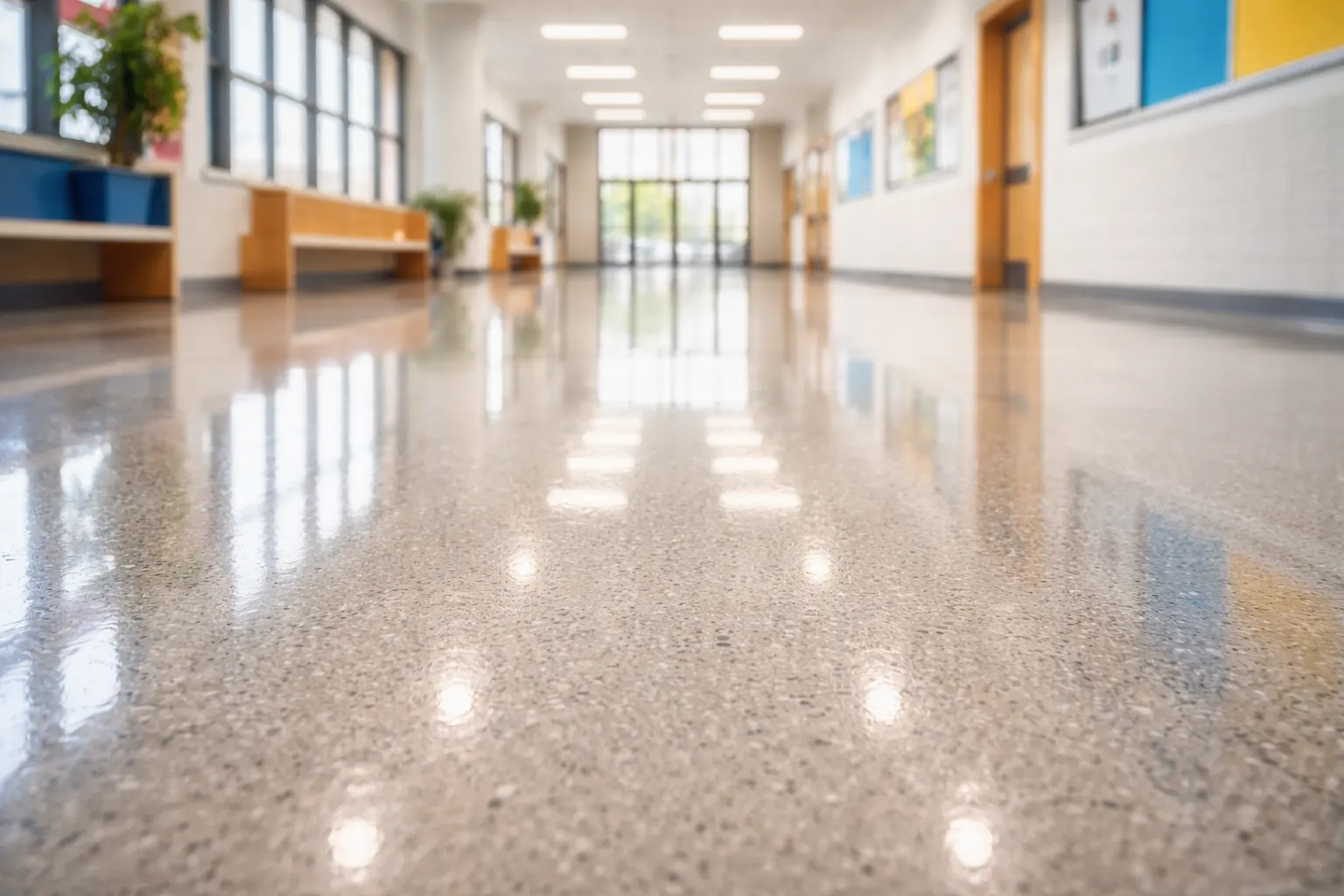
Preparation sets the standard for everything that follows.
Clear Protection With a Refined Look
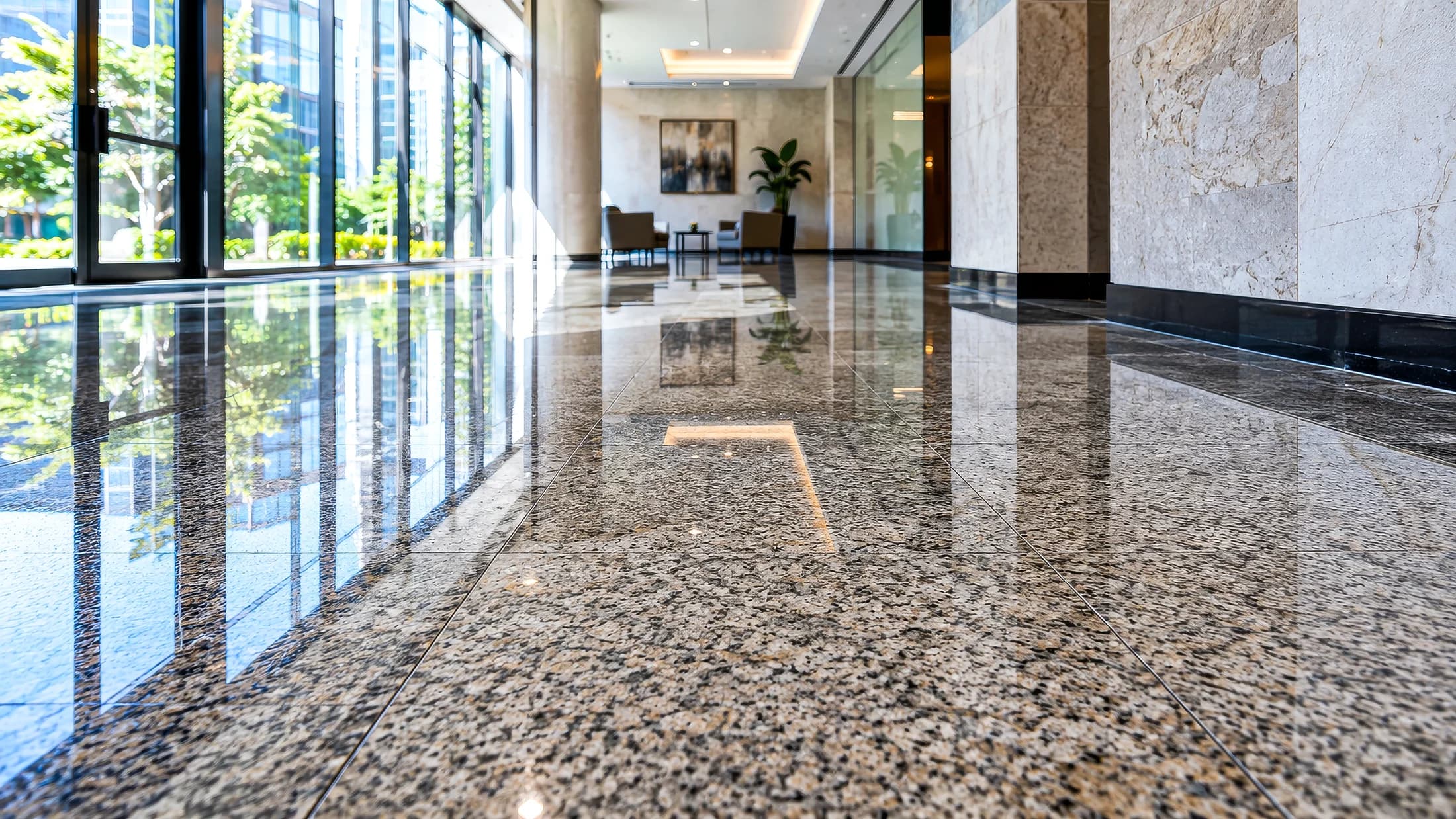
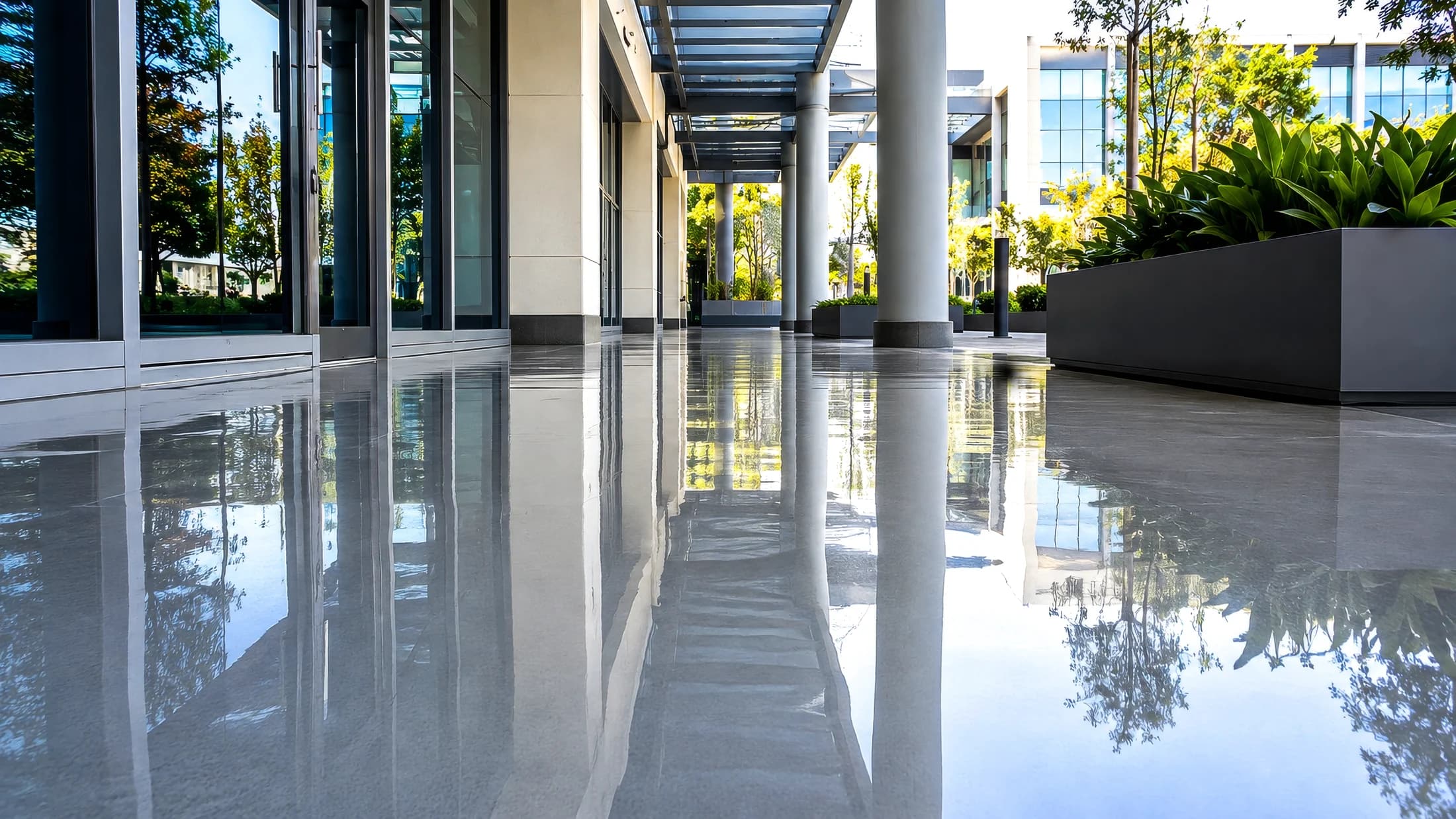
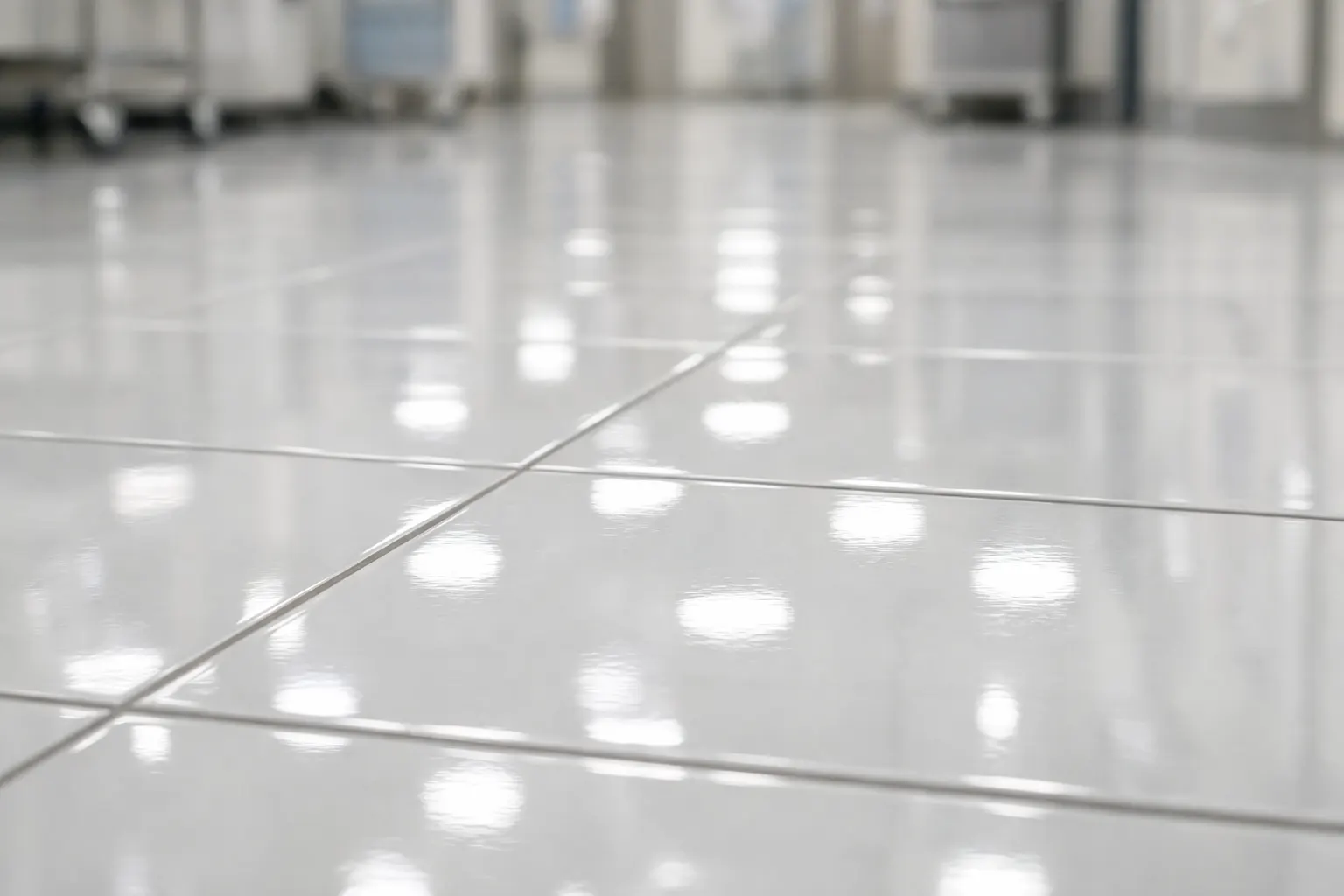
After proper preparation and application, Duralyx Crystl Bond™ is designed to cure into a clear protective finish. The finish can help restore visual depth, create a cleaner and more uniform appearance, and support resistance to everyday surface stress.
Treatment may help improve
- Color depth
- Surface clarity
- Light reflection
- Gloss consistency
- Resistance to daily abrasion
- Resistance to moisture exposure
- Resistance to compatible cleaning chemicals
- Routine cleanability
What the cured coating delivers
Hydrophobic
Beads and sheds water
Clear Depth & Gloss
Restores light and clarity
Abrasion Resistant
Stands up to daily traffic
Easy to Clean
Simpler routine upkeep
Longer Protection Changes the Maintenance Equation
For homes, commercial properties, healthcare facilities, schools, hospitality spaces, and property managers, surface care is not only about how a floor looks today. It is also about how often the surface needs major service, how much downtime is required, how predictable maintenance becomes, and how well the space presents over time.
A longer-lasting protective system can help reduce the need for repeated short-cycle restoration. That can mean fewer disruptions, more consistent appearance, better planning, and a surface that is easier to care for day to day.
Meaningful outcomes
- Fewer disruptive restoration cycles
- More predictable maintenance planning
- Improved appearance retention
- Easier routine cleaning
- Better first impressions in high-visibility spaces
- A finish strategy aligned with the surface, traffic, and environment
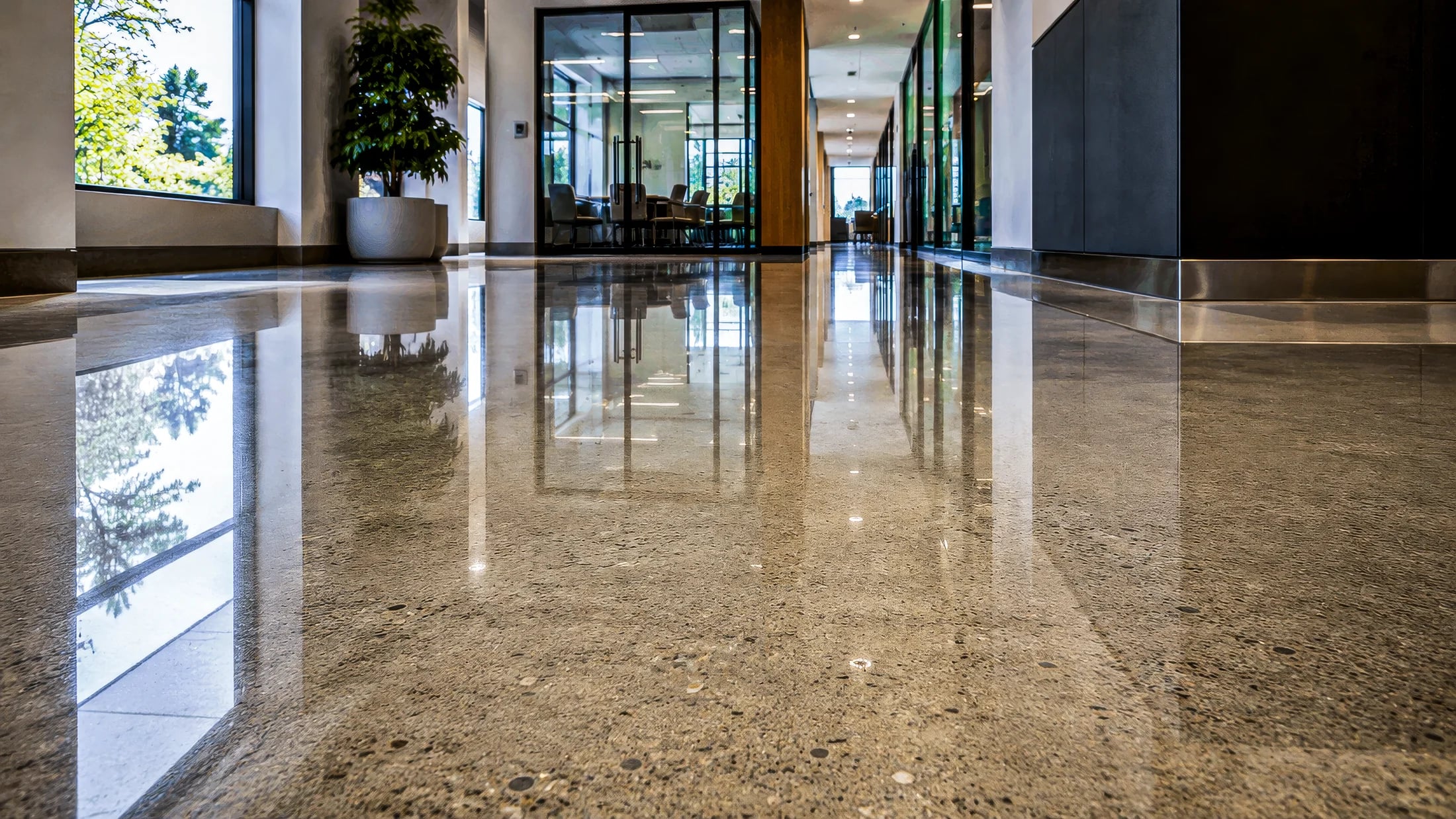
Protection you can see. Science you can explain.
Topical Maintenance vs. Bonded Surface Protection
Wax or Polish
- Primarily rests on top of the surface
- Often creates a short-term gloss
- May need frequent buffing or reapplication
- Can build up, dull, yellow, or collect residue
- May require stripping before renewal
Crystl Bond™
- Engineered to bond with a properly prepared surface
- Designed to create a clear protective finish
- Helps support a longer treatment cycle
- Can improve visual depth and cleanability
- Requires proper evaluation, preparation, application, and maintenance
Both approaches can improve appearance. The difference is the strategy: short-cycle surface shine versus a bonded protective treatment designed for longer-lasting performance.
Measured Performance With Real-World Limits
Duralyx Crystl Bond™ is supported by documented performance indicators, including hardness, microbial growth testing, pathogen reduction testing, and limited warranty coverage. These indicators help explain what the coating is designed to support, but they should not be treated as universal guarantees.
Pencil Hardness
This indicates test-supported hardness performance after curing. It helps show resistance to surface marking and everyday abrasion under the test method. It does not mean the surface cannot be scratched, gouged, damaged by impact, damaged by improper cleaning, or affected by substrate failure.
Microbial Growth
In ASTM G21 laboratory testing, the cured coating registered 0% microbial growth under documented test conditions. This does not replace cleaning, disinfection, sanitation, or facility protocols.
Pathogen Reduction
Testing indicated greater than 40% pathogen reduction under documented conditions. Real-world performance depends on the contaminant, cleaning routines, traffic, surface condition, environment, and maintenance.
Limited Warranty
Warranty coverage depends on the written warranty terms, project eligibility, professional application, approved maintenance, and proper care after installation.
All performance figures reflect documented or laboratory test conditions and are not universal guarantees. Results vary by surface type, condition, preparation, traffic, use, environment, application, cleaning, and maintenance.
Long-Lasting Does Not Mean Maintenance-Free
Duralyx Crystl Bond™ is designed to make surfaces easier to maintain, not to eliminate maintenance. Treated surfaces still need compatible cleaning products, appropriate cleaning frequency, prompt spill response, and care routines matched to the environment.
Maintenance guidance should address
- Approved cleaning products
- Cleaning frequency by traffic level
- Products or tools to avoid
- Spill response
- Inspection schedule
- Warranty maintenance requirements
- When to request a surface review
It always starts with your surface.
Every Surface Starts With Evaluation
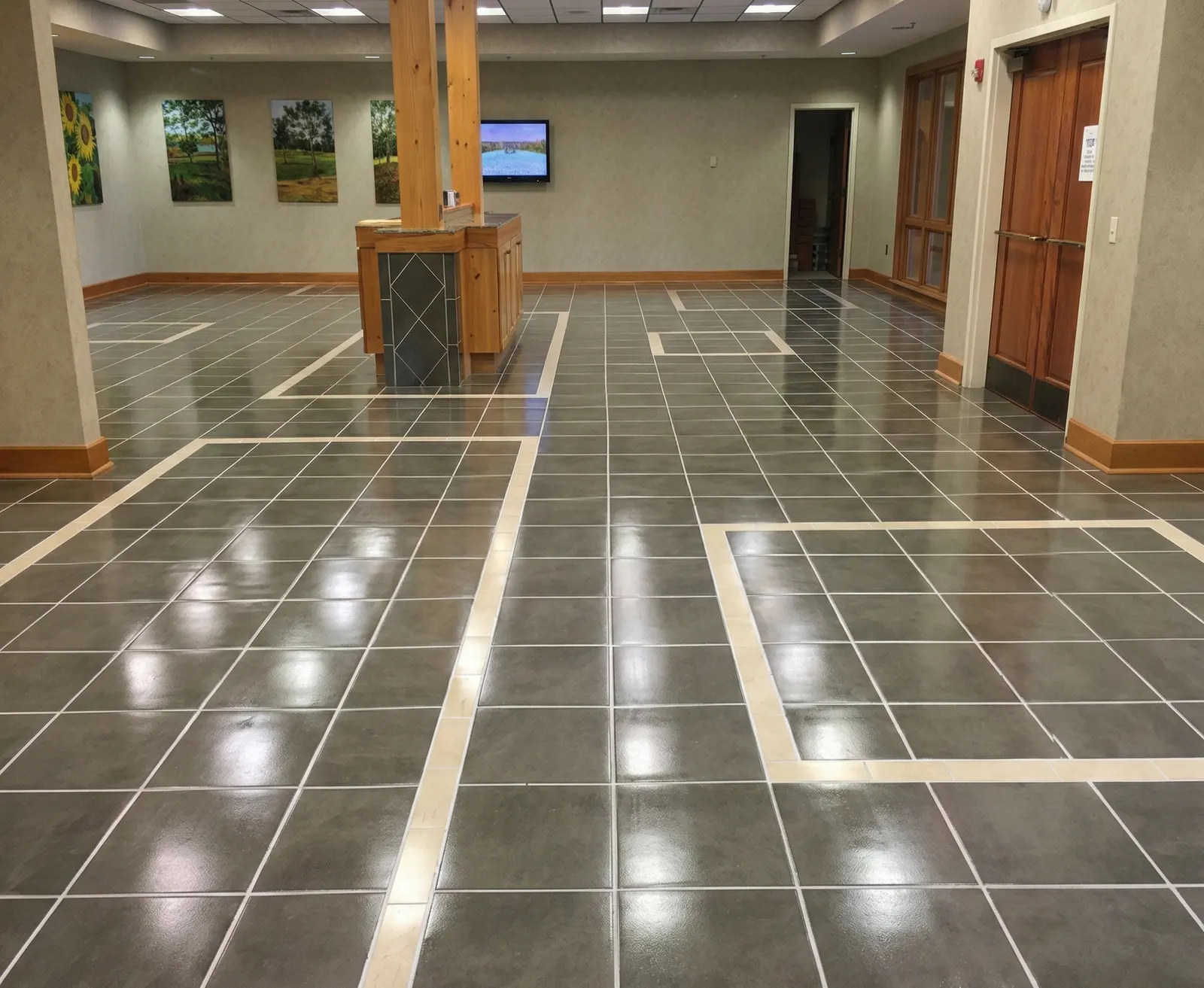
The same coating can behave differently on concrete, tile, terrazzo, slate, travertine, granite, brick, pavers, or garage floors. A surface evaluation helps determine whether Duralyx is suitable and what preparation is required before application.
Evaluation includes
- Surface material
- Age and condition
- Existing coatings or treatments
- Porosity and texture
- Moisture exposure
- Traffic level
- Cleaning routines
- Desired finish
- Environmental conditions
- Maintenance expectations
Common Questions About the Bond
Does covalent bonding mean the coating becomes permanent?
No. Covalent bonding describes the type of connection the coating is engineered to create with a properly prepared surface. It supports durability, but performance still depends on surface condition, application, environment, traffic, cleaning, and maintenance.
Can Duralyx bond to any surface?
No. The surface must be suitable and properly prepared. Existing waxes, sealers, oils, moisture, unstable coatings, or incompatible substrates may prevent proper bonding.
Is this the same as a sealer?
Duralyx functions as a protective hard-surface coating system, but it is engineered around bonding and long-term surface performance rather than only sealing or adding temporary shine.
Will it change the look of the surface?
It can. Many surfaces appear cleaner, deeper, brighter, or more uniform after treatment. The final appearance depends on the material, condition, preparation, lighting, and desired finish.
Does the coating replace cleaning?
No. Duralyx can support easier routine care, but treated surfaces still require appropriate cleaning and maintenance.
Why do I need an evaluation before pricing or scheduling?
The evaluation helps confirm material suitability, preparation needs, expected finish, maintenance requirements, and whether the project qualifies for the treatment and warranty.

Ready to See Whether Your Surface Qualifies?
A professional evaluation helps determine whether Duralyx Crystl Bond™ is the right treatment for your surface, what preparation is required, and what results you can reasonably expect.